
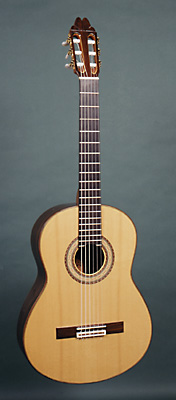
Welcome to the fantastic world of classical guitar. In this site, you will find classical guitar pieces, in midi format, for one and more guitars: actually 5641 MIDI files from 96 composers. Information on how to create midi files and a tutorial on the tablature notation system is presented. Images of ancient guitars provided.
|
|
This official product perfectly matches the "slideshow" and "CD-ROM" aspects of your keyword, with the screensavers functioning as automated slideshows of in-game images.
This E-PD-ROM is a testament to the analog-digital transition. It represents a world where information was scarce, distribution was physical, and "slideshow" was a valid software genre. For the true Evangelion completist, owning or even glimpsing the is like finding a lost Angel—a silent, beautiful, and profoundly strange relic from the Second Impact of the digital age.
This article explores the history, context, and contents of this rarely discussed digital collectible, shedding light on a unique era of Evangelion fandom. What is the "Neon Genesis Evangelion Slideshow E -PD- ROM"?
The software featured high-quality digital cells, promotional art, and screenshots of crucial moments—ranging from Eva Unit-01 going berserk to the striking, geometric designs of the Angels.
To understand the historical relevance of this asset, it is necessary to dissect the technical nomenclature of the phrase:
: Simple games or tools made by fans using the limited development kits of the era. Expected Content
This stillness actually mirrored the show’s own avant-garde tendencies. Evangelion
Commonly used in vintage software archiving to denote an "English" version, "Edition," or an episodic designation (e.g., Episode/Volume E).
In the 1990s, "PD" referred to software or freeware. Enthusiasts compiled large libraries of freeware, fan-made programs, and extracted media onto single CD-ROMs to distribute at conventions or via early mail-order catalogs. If this is a fan-made compilation, a "PD ROM" would signify a disc containing community-distributed slideshow programs, image viewers, and extracted game assets from official software like Typing Project E . Emulator and ISO Naming Conventions
Running legacy environments like Windows 95 or Windows 98 to execute original Gainax software installers.
These are — they are "fan disc" / collector items, often packaged with magazines (like Newtype or Anime V ) or sold directly at conventions.
In the mid-1990s, Neon Genesis Evangelion exploded into a cultural phenomenon. The series’ complex narrative, psychological depth, and striking visual design captivated audiences in Japan and around the world. As the franchise expanded, so did its reach into new media, particularly the then-burgeoning world of home computing.
Developed as "Public Domain" software, meaning it was made by fans and distributed for free on BBS (Bulletin Board Systems) or early internet sites rather than being an official Gainax product.
Today, these ROMs exist primarily as digital artifacts within the "retro" community. They are snapshots of a time when the anime industry was experimenting with how to keep a franchise alive between major releases. While they don't offer the gameplay of Iron Maiden or the narrative weight of The End of Evangelion
Composers are grouped in 6 pages: A-B;
C-F;
G-L;
M-O;
P-R; S-Z .
J.-S.
Bach , A.
Barrios Mangore , N. Coste
, M. Giuliani , F.
Sor and F.
Tarrega are on their own page
Click here
to listen to 20 great MIDI from the site
Composers in alphabetical order
This official product perfectly matches the "slideshow" and "CD-ROM" aspects of your keyword, with the screensavers functioning as automated slideshows of in-game images.
This E-PD-ROM is a testament to the analog-digital transition. It represents a world where information was scarce, distribution was physical, and "slideshow" was a valid software genre. For the true Evangelion completist, owning or even glimpsing the is like finding a lost Angel—a silent, beautiful, and profoundly strange relic from the Second Impact of the digital age.
This article explores the history, context, and contents of this rarely discussed digital collectible, shedding light on a unique era of Evangelion fandom. What is the "Neon Genesis Evangelion Slideshow E -PD- ROM"?
The software featured high-quality digital cells, promotional art, and screenshots of crucial moments—ranging from Eva Unit-01 going berserk to the striking, geometric designs of the Angels. NEON GENESIS EVANGELION SLIDESHOW E -PD- ROM
To understand the historical relevance of this asset, it is necessary to dissect the technical nomenclature of the phrase:
: Simple games or tools made by fans using the limited development kits of the era. Expected Content
This stillness actually mirrored the show’s own avant-garde tendencies. Evangelion This official product perfectly matches the "slideshow" and
Commonly used in vintage software archiving to denote an "English" version, "Edition," or an episodic designation (e.g., Episode/Volume E).
In the 1990s, "PD" referred to software or freeware. Enthusiasts compiled large libraries of freeware, fan-made programs, and extracted media onto single CD-ROMs to distribute at conventions or via early mail-order catalogs. If this is a fan-made compilation, a "PD ROM" would signify a disc containing community-distributed slideshow programs, image viewers, and extracted game assets from official software like Typing Project E . Emulator and ISO Naming Conventions
Running legacy environments like Windows 95 or Windows 98 to execute original Gainax software installers. For the true Evangelion completist, owning or even
These are — they are "fan disc" / collector items, often packaged with magazines (like Newtype or Anime V ) or sold directly at conventions.
In the mid-1990s, Neon Genesis Evangelion exploded into a cultural phenomenon. The series’ complex narrative, psychological depth, and striking visual design captivated audiences in Japan and around the world. As the franchise expanded, so did its reach into new media, particularly the then-burgeoning world of home computing.
Developed as "Public Domain" software, meaning it was made by fans and distributed for free on BBS (Bulletin Board Systems) or early internet sites rather than being an official Gainax product.
Today, these ROMs exist primarily as digital artifacts within the "retro" community. They are snapshots of a time when the anime industry was experimenting with how to keep a franchise alive between major releases. While they don't offer the gameplay of Iron Maiden or the narrative weight of The End of Evangelion
Note to MIDI sequence contributors
Your submissions are welcomed.
Please send them by e-mail (end of text). Pieces
should bear the composer's name and be properly identified.(ex.: J.K. Mertz (1806-1856) Nocturne
Op.4 No.2.). The submissions
should bear information on the transcriber or arranger when available. The submitter's name
will appear beside the accepted submission.
This site exists primarily to showcase pieces written for the classical
guitar. Established and recognized transcriptions and arrangements (e.g.,
Tarrega, Segovia,..) of pieces written by non-guitar composers will also be given
high priority.
New compositions for the classical guitar are also welcomed. New
compositions that meet quality guidelines will be added to the site. For
new contributors, it would be appreciated if you would also submit several
pieces by known composers in addition to your own compositions. This will
help to expand the repertoire of established works for the classical guitar in
addition to expanding the repertoire of new music.
Last update: March 8 2026
Copyright François Faucher 1998-2025
 G.F.Handel's Sonata 2. Allegro
3.Adagio HWV368
G.F.Handel's Sonata 2. Allegro
3.Adagio HWV368